Tinnitus guide
Understanding and Managing Tinnitus
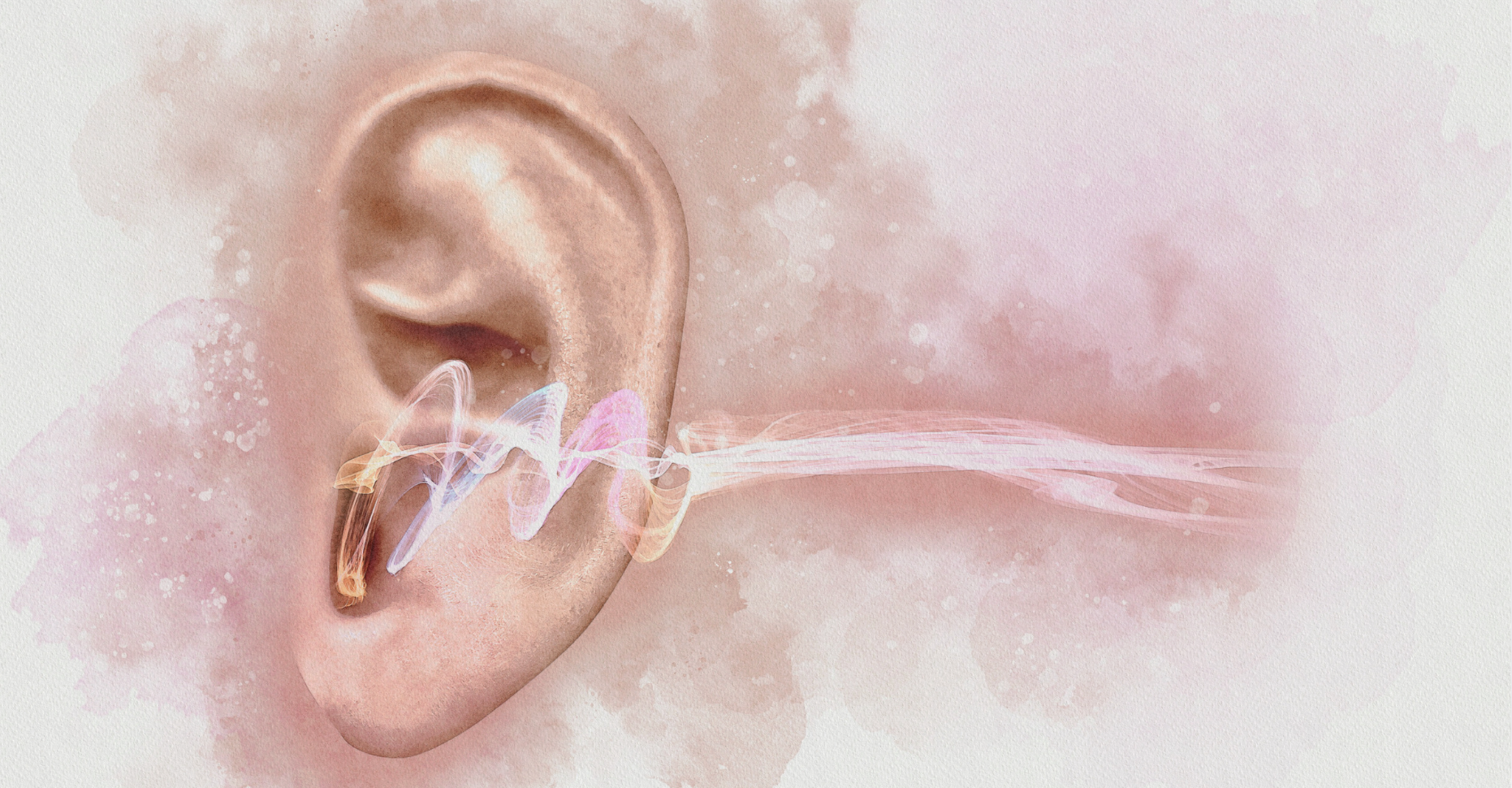
Tinnitus is that phantom sound in your ears, a ringing or buzzing or hissing, often after loud noise exposure – and it’s there most often in quiet (when no external sound is present). It can be distressing, frustrating, and for some people genuinely incapacitating. It is one of the most common long-term medical conditions in the world, affecting up to a quarter of adults.¹
So, what is tinnitus? If you are reading this because tinnitus has recently appeared in your life, or because it has been there for years and you have simply had enough of it, we want to start with the most important message in this article: tinnitus is real, it is common, and there is a great deal that can be done to reduce its impact on your life.
A note on what this article is for
This guide explains what tinnitus is, what causes it, what the latest research tells us, and crucially, what the pathway to managing it actually looks like for patients at Southwest Hearing. It is written to be read at your own pace and returned to whenever this guide is needed again.
what is tinnitus?
Tinnitus not a disease in itself. It is a symptom, and it can arise from a wide range of underlying causes.²
-
A persistent sound only you can hear, in one or both ears. It may be temporary, recurring or chronic. This is by far the most common form.³
-
Rare. A rhythmic pulsing or whooshing, often in time with your heartbeat, also called pulsatile tinnitus. A clinician may be able to hear it during examination. Pulsatile tinnitus should always be investigated.³
What it can sound like
Tinnitus is not just one sound! People describe ringing, buzzing, hissing, humming, roaring, clicking and whooshing. Some people experience musical hallucinations.¹ ʳ It may be in one ear, both ears, or seem to sit centrally inside the head. It may be constant or come and go. These are all variations of tinnitus, and in most cases the pitch and characteristics are unique to each listener.
what causes tinnitus?
Common causes
Hearing loss, including age-related hearing loss
Earwax blockage or ear canal obstruction
Ear infections, particularly of the middle ear
Head or neck injuries
Certain medications, including some antibiotics, antidepressants and NSAIDs
Less common causes
Ménière’s disease
Temporomandibular joint (TMJ) disorders
Vascular conditions, including high blood pressure and atherosclerosis
Other chronic conditions including diabetes, thyroid problems, migraine, anaemia and autoimmune disorders³
Stress, anxiety, and sleep deprivation are worth mentioning separately. They rarely cause tinnitus outright, but they very reliably make it feel much worse, and this is one of the reasons the psychological side of tinnitus management matters so much.
what the latest research tells us
The central gain theory
The leading explanation for the link between tinnitus and hearing loss is that when the ears send less input to the brain, the brain compensates by becoming more sensitive. It listens in to that absence, and fills the void with what should be missing (by its best prediction - often by amplifying the latent or ‘background activity’ signals from the cochlea). This is called central gain. The result is that the brain creates an illusory sound, in a similar way to how someone with an amputated limb may feel phantom sensations from their missing body part.⁴
Hidden hearing loss, why your hearing test can look normal
Up to a quarter of people with tinnitus have normal results on standard hearing tests.⁴, and for a long time this was a genuine puzzle to many audiologists! The explanation has come from a landmark 2009 finding by Sharon Kujawa and Charles Liberman at Harvard Medical School, who showed that under moderate noise exposure it is the nerve fibres carrying signals from the hair cells to the brain that are damaged first, before any hair cells die.⁴
Crucially, the damage does not affect all fibres equally. There are three different types of nerve fibre; ones processing quiet, intermediate, and loud sounds respectively. The fibres that process loud sounds are the most susceptible to damage.⁴ Because a standard audiogram only measures the quietest sounds you can hear, this kind of damage does not show up on it at all.
Two years later, Roland Schaette and David McAlpine at University College London confirmed this pattern in people, not just animals, finding that those with severe tinnitus but normal hearing tests had lower ‘loud processing’ nerve activity travelling from the ear to the brain.⁴ They proposed the term hidden hearing loss, and it has stuck – for good reason.
Why this matters for you
If you have tinnitus and struggle to follow conversation in noisy places, but have been told your hearing is normal, you are not imagining it. This is a recognised and actively researched phenomenon, and likely means your auditory nerve fibres are struggling to process the input from your cochlea in this loud environment.
Where treatment research is heading
Two broad strategies are being pursued. The first is regrowing damaged cochlear nerve connections, where work has shown that fibres and synapses can be coaxed to regrow using natural signalling molecules called neurotrophins (particular focus on neurotrophin-3.)⁴. The second is turning down overactivity in the brain itself, using devices that pair sound with electrical stimulation, known as bimodal neuromodulation. Lenire, developed by Neuromod Devices in Dublin, pairs tongue stimulation with sound, and received European approval in 2019.⁴
These are genuinely promising, but it is worth being honest about the current position. What’s genuinely evidence-based and currently available are ways to make peace with it⁴. That is precisely what the pathway described later in this article is built around.
WHO does tinnitus affect?
Around 90% of people who have tinnitus also have some degree of hearing loss.⁶
This is one of the most important reasons to have a full hearing assessment when tinnitus appears, it very often reveals something treatable and addressable.
Occupations at higher risk
A note for our local community
Southwest Hearing sits close to a substantial serving and veteran military population, and we work regularly with musicians across South Devon. If you fall into either group you are at meaningfully elevated risk, and custom hearing protection is the single most effective thing you can do.
the four stages of tinnitus
People often move through recognisable stages in their relationship with tinnitus. Not everyone progresses in a straight line, and some people find the later stages harder to reach than others, but understanding the pattern can be reassuring in and of itself.
-
You first notice the sound. It may be occasional or intermittent, and may not yet significantly affect daily life.
-
As it persists, emotional reactions develop: annoyance, frustration, anxiety or distress. Sleep disturbance, difficulty concentrating and heightened sound sensitivity are common at this stage. This is when most people seek help.
-
Perception and emotional response begin to shift. The sound is still present, but becomes less bothersome and less disruptive. Daily activities resume with less interference.
-
Tinnitus has been integrated into life. Effective coping strategies are in place, and the sound no longer holds significant emotional power.
What habituation actually means
Habituation is the process by which the brain learns to filter out a stimulus it has decided is not threatening. It does not mean the tinnitus disappears or gets quieter. It means your emotional and cognitive response to it diminishes, until it stops commanding your attention.
This can happen naturally over time. It can also be actively accelerated through counselling, sound therapy, cognitive behavioural therapy and relaxation techniques , which is precisely what the management pathway is designed to do.
Five common myths about tinnitus
1.
The myth
Tinnitus is a disease.
The reality
Tinnitus is a symptom, not a disease. It can arise from a wide range of underlying conditions including vascular disease, noise-related injury, and even traumatic brain injury.¹¹
2.
The myth
Only people with hearing loss get tinnitus.
The reality
Hearing loss and tinnitus are two separate conditions that often overlap , but not always. Around a quarter of people with tinnitus have normal standard hearing test results.⁴ Hearing aids can help both conditions where hearing loss is present.¹¹
3.
The myth
Tinnitus is harmless.
The reality
For some people, tinnitus signals a serious underlying medical issue , heart disease, high blood pressure, or an acoustic neuroma. This is exactly why a proper assessment matters.¹¹
4.
The myth
It is all in your head.
The reality
There are currently no objective tests that demonstrate its presence,¹² but tinnitus is real. Millions of people live with it, and there are professionals who can help you manage it.¹¹
5.
The myth
There is nothing you can do about it.
The reality
This is the most damaging myth of all. Whether tinnitus is mild, moderate or severe, there are evidence-based approaches that genuinely reduce its impact , including habituation, sound therapy and cognitive behavioural therapy.¹¹
The thoughts that make tinnitus worse
One of the most useful things to understand about tinnitus is that the sound itself is only part of the problem. How you think about the sound has an enormous influence on how much it affects you.
Cognitive behavioural therapy identifies recurring patterns of unhelpful thinking, often called thought errors. Recognising these in your own thinking is genuinely the first step towards changing them. The table below sets out the most common ones seen in tinnitus.¹³
THOUGHT ERRORS
-
What it means: Seeing no shades of grey, missing the smaller positives in between.
"My life used to be perfect before I had tinnitus , now it is horrible."
—
Corrective thought: Look for the middle ground.
"I have handled problems before and I can do it again now. There is still a great deal I enjoy." -
What it means: One aspect of a complex situation takes all the attention, while others are ignored.
"I was having a good time at the party, but hearing my tinnitus ruined everything."
—
Corrective thought: Widen the lens. Deliberately list what else happened, not just the one went wrong.
"I noticed my tinnitus for a few minutes, but I also had good conversations and enjoyed seeing people.” -
What it means: Assuming what others think, without evidence.
"People think I’m stupid when I ask them to repeat things."
—
Corrective thought: Consider alternative explanations.
“Most people ask others to repeat things, and nobody has ever reacted badly when I have." -
What it means: Treating negative expectations about the future as established fact.
"I am bound to have a miserable day when I hear my tinnitus first thing."
—
Corrective thought: Hypothesis, rather than certainty.
"I have noticed my tinnitus this morning, but I do not yet know how today will go.” -
What it means: Assuming emotional reactions reflect the true situation.
"My tinnitus makes me feel hopeless, so there is no hope."
—
Corrective thought: Separate feeling from fact.
"I feel hopeless right now, and that is genuinely hard. But feeling hopeless is not the same as there being no options.” -
What it means: Treating one event as characteristic of life in general.
"Because of my tinnitus I was awake all night. Every night will be the same."
—
Corrective thought: Replace ‘always’ and ‘never’ with specifics.
"Last night was a bad night. I have also had nights recently where I slept reasonably well. This was one night, not every night." -
What it means: Discounting positive experiences that conflict with a negative view.
"I didn’t think much about my tinnitus today, but that was a fluke."
—
Corrective thought: Acknowledge and focus on the good.
"I barely noticed it today. That is real and it counts. It shows my brain can tune it out.” -
What it means: Treating negative events as intolerable rather than seeing them in perspective.
"My tinnitus is louder , I must be going deaf."
—
Corrective thought: Ask what the most likely explanation is.
"Tinnitus fluctuates, and it is often louder when I am tired or stressed. It has been louder before and settled again. If I am worried, I can get it checked." -
What it means: Using should and have to statements to provide motivation or control.
"I should never have listened to rock music. I did this to myself."
—
Corrective thought: Swap self-blame for the past, with practical choices now.
"Like most people, I did not know the risks back then. What I can control is protecting my hearing from now on." -
What it means: Assuming you are the cause of something when other factors are responsible.
"I ruined everyone’s evening because I was miserable."
—
Corrective thought: Consider factors outside of your control.
"I was quieter than usual, but everyone else was enjoying themselves. My mood was one small part of a much bigger evening."
This is not about positive thinking.
Challenging thought errors is not about pretending tinnitus is fine, or telling yourself it does not bother you. It is about noticing when a thought has become distorted, and deliberately replacing it with a more accurate one. This is a trainable skill, and it works.
How we assess tinnitus at Southwest Hearing
Before anything can be managed, it needs to be properly understood. Our full hearing assessment is comprehensive, and is designed to answer three questions: is there an underlying cause that can be treated, is there hearing loss contributing to it, and how much is the tinnitus actually affecting your life?
What a full hearing assessment includes
Our assessment tells us which of the pathways below is right for you. It is not a formality, it genuinely changes the recommendation.
-
A validated 25-item questionnaire scored 0–100, measuring the real-world impact of your tinnitus across eight areas including intrusiveness, sleep, concentration, relaxation and emotional wellbeing. This gives us an objective baseline to measure progress against.
-
A tiny camera examination of the ear canal and eardrum, displayed on screen so you can see exactly what we see. This identifies wax blockage, infection, perforation and structural changes.
-
Measures the pressure and movement of the eardrum, assessing middle ear function and identifying fluid, pressure problems or Eustachian tube dysfunction.
-
Assesses the protective reflex of the middle ear muscles, a useful indicator of auditory pathway function.
-
A complete hearing assessment using warbled tones, with masking where required, testing both air and bone conduction. This establishes precisely whether hearing loss is present, its type, and its configuration.
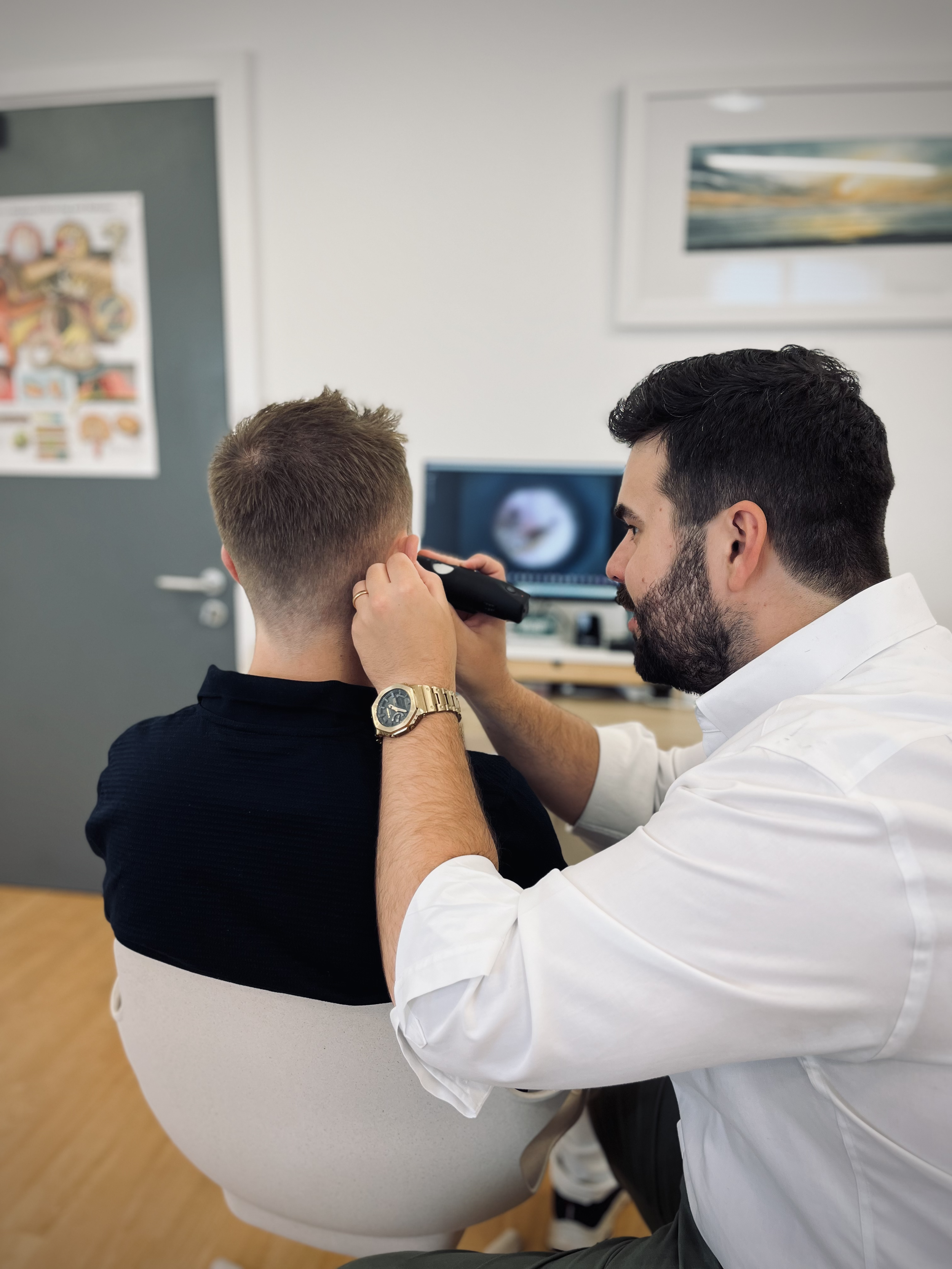
This assessment tells us which of the pathways below is right for you. It is not a formality, it genuinely changes the recommendation.
Your management pathway
Being clear about what we do and do not offer
Southwest Hearing provides comprehensive tinnitus diagnostics, and gold-standard hearing aid provision where hearing loss is present. We do not provide ongoing tinnitus rehabilitation therapy as a service.
Instead, we have built a deliberate referral network of trusted, evidence-based options, and we will direct you to the one that genuinely fits your situation, rather than the one that happens to be ours.
If you have hearing loss
Where our assessment identifies hearing loss, correctly fitted hearing aids are the single most effective intervention available for tinnitus. They work in two ways: by restoring the input the brain has been missing, they directly address the central gain mechanism described earlier; and by reintroducing ambient environmental sound, they naturally reduce the contrast that makes tinnitus stand out.¹⁴
This is where we can offer genuinely gold-standard care. Our hearing aid provision includes full real-ear verification to ensure the devices are delivering precisely the prescribed output for your individual ear acoustics, comprehensive aftercare, and ongoing adjustment as your hearing and your tinnitus evolve. Many modern devices also include dedicated tinnitus sound generators built in, which can be fine-tuned to your specific needs.
If you do not have hearing loss, TinniSoothe
For patients whose hearing is normal, amplification is not the answer, but sound therapy still has an important role. We recommend TinniSoothe, a dedicated tinnitus sound therapy device designed for exactly this situation.
Southwest Hearing patients receive an exclusive 10% discount. Ask us for your code at your appointment.
Understanding sound therapy
Sound therapy works by reducing the contrast between your tinnitus and the silence around it. It is not about drowning the sound out, it is about giving your brain something else to attend to, which supports the habituation process described earlier. Different sound types suit different people:
-
Equal energy across all frequencies. Similar to untuned radio static. Effective, but some find it harsh.
-
More energy in the lower frequencies, with energy halving each octave. Generally perceived as more natural and less harsh than white noise.
-
More low-frequency energy still, decreasing at 6dB per octave. Deeper and more rumbling. Many people find it the most soothing of the three.
Beyond masking, sound therapy reliably supports better sleep, reduces stress and anxiety, and can be personalised to your specific tinnitus pitch and preferences.
For therapy and habituation, two routes
Cognitive behavioural therapy has the strongest evidence base of any tinnitus intervention, and is recommended for persistent and bothersome tinnitus.¹¹ It works by changing the emotional and cognitive response to tinnitus rather than the sound itself , addressing exactly the thought errors set out earlier in this article.
We refer to two different routes depending on what suits you:
A structured, evidence-based tinnitus therapy programme delivered through an app, combining CBT, mindfulness and habituation techniques. Excellent for patients comfortable with technology who want to work through a programme at their own pace, at home.
For patients who would prefer face-to-face / in-person support, are less comfortable with technology, or whose tinnitus has reached a more severe or crisis point. We have an established referral relationship and refer with confidence.
Which route is right for you?
We will discuss this with you directly at your assessment. There is no wrong answer, and choosing one does not rule out the other. What matters is that you engage with something, the evidence consistently shows that active management produces better outcomes than waiting it out.
What you can do yourself
Prevention and risk reduction
Tinnitus cannot always be prevented, but certain measures genuinely lower the risk of developing it and can reduce its severity if you already have it.³
-
Sustained or repeated loud sound is the most common preventable cause. This is the single highest-impact action available to you, and custom hearing protection is something we excel at providing.
-
When using headphones, listen at no more than 60% of maximum volume for no longer than 60 minutes at a time.
-
Keeping blood vessels healthy through diet and exercise reduces tinnitus risk.³
-
These affect blood flow and can increase tinnitus risk and severity.³
A rule of thumb worth remembering
If a venue is uncomfortably loud, wear earplugs. If you come out with temporary tinnitus, that means you have also likely accrued a small portion of permanent damage to the auditory nerves we spoke about earlier. ⁴
Day to day
Manage stress actively, stress does not cause tinnitus, but it reliably amplifies it
Protect your sleep, sound enrichment at night is often where sound therapy helps most (see TinniSoothe dock)
Stay engaged with activities you enjoy, attention given elsewhere is attention not given to tinnitus
Avoid silence where you find it difficult, a quiet room amplifies the contrast
When to seek help urgently
Most tinnitus is not a medical emergency. However, you should seek prompt medical attention if your tinnitus:
Is pulsatile, rhythmic, in time with your heartbeat
Is in one ear only, particularly if new or sudden
Is accompanied by sudden hearing loss
Is accompanied by dizziness, vertigo or facial weakness
Follows a head injury
speak to us
If tinnitus is affecting your sleep, your concentration, your work or your enjoyment of life, please do not simply put up with it. A comprehensive assessment will establish what is causing it, whether hearing loss is contributing, and which management route genuinely suits you
Southwest Hearing,
Leatside Surgery,
Babbage Road,
Totnes,
Devon TQ9 5JA
Telephone: 01803 900242
Email: hello@southwesthearing.co.uk
Jonathan Doyle MSc BSc (Hons) RHAD is an audiologist and clinical director at Southwest Hearing, with specialist interests in musician’s, hearing protection, and vestibular vertigo assessment.
References
1. Clare Wilson, “Sound of silence”, New Scientist, 20 April 2024, pp. 32–35.
2. “Why Are My Ears Ringing?” American Tinnitus Association, April 2015.
3. “Tinnitus”, MayoClinic.org, November 2022.
4. Clare Wilson, “Sound of silence”, New Scientist, 20 April 2024 , citing research by Stéphane Maison and Charles Liberman (Harvard Medical School), Sharon Kujawa (Harvard, 2009), Roland Schaette and David McAlpine (University College London), Susan Shore (University of Michigan), Gabriel Corfas (University of Michigan) and Will Sedley (Newcastle University).
5. Jamil Al-Swiahb and Shi Nae Park, “Characterization of Tinnitus in Different Age Groups: A Retrospective Review”, Noise & Health Journal, July–August 2016.
6. Temma Ehrenfeld, “Tinnitus and hearing loss: What’s the connection?” HealthyHearing.com, November 2019.
7. Glenn Schweitzer, “Are you a musician with tinnitus? Why it happens and how to cope”, HealthyHearing.com, 2021.
8. “Noise and Occupational Hearing Loss: Manufacturing”, National Institute for Occupational Safety and Health, January 2023.
9. “Noise and Occupational Hearing Loss: Construction”, National Institute for Occupational Safety and Health, January 2023.
10. Caroline J. Schmidt et al., “Cognitive Behavioral Therapy for Veterans With Tinnitus”, Federal Practitioner, August 2018.
11. Joy Victory, “10 common myths about tinnitus”, HealthyHearing.com, February 2020.
12. Shuwen Fan and Shufeng Li, “Objective Detection of Tinnitus Based on Electrophysiology”, Brain Sciences, August 2022.
13. “Thinking Alternative Thoughts”, Widex tinnitus management worksheet.
14. Philip J. Sanders et al., “Hearing aids with tinnitus sound support reduce tinnitus severity for new and experienced hearing aid users”, Frontiers in Audiology and Otology, August 2023.